
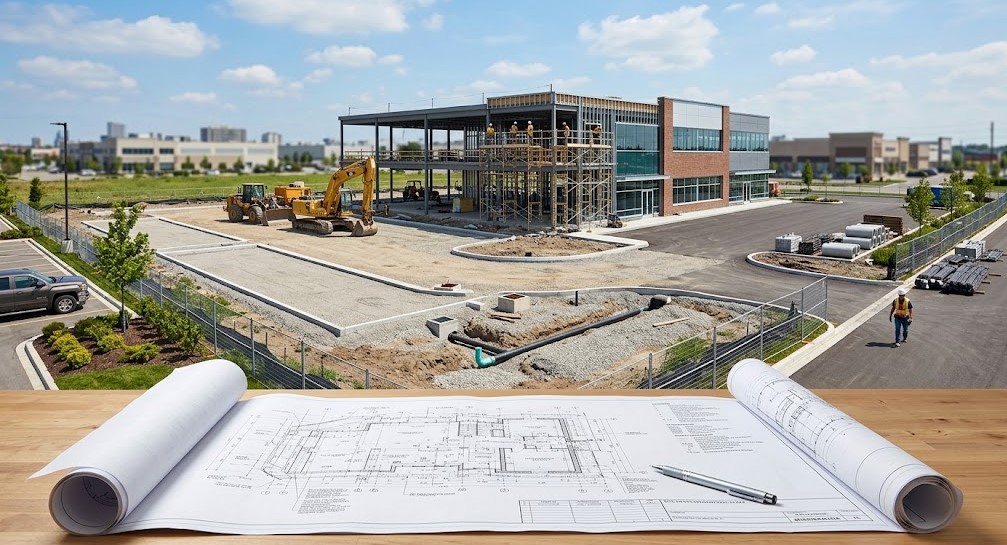
Navigating a commercial construction project in Ontario involves balancing architectural vision, budget, site constraints, and local regulations. Before breaking ground, property owners and developers must establish a reliable infrastructure foundation. That is where professional civil engineering for commercial development in Ontario becomes essential.
Civil engineering bridges the gap between initial concept and actual construction. By transforming raw land or redeveloping existing properties into fully serviced, compliant sites, civil engineers ensure that commercial developments move efficiently through design, site plan approval, and construction.
What Is Civil Engineering for Commercial Development?
Civil engineering for commercial development focuses on designing and managing the physical infrastructure surrounding and supporting a building. While architects design the building structure, civil engineers design everything below, around, and leading up to the site.
In Ontario, commercial development civil engineering encompasses several core disciplines:
- Site Planning & Feasibility: Evaluating property features, elevations, and access points.
- Site Servicing Design: Planning connections for water mains, sanitary sewers, and storm sewers.
- Grading and Drainage Plans: Controlling surface runoff and shaping land contours to protect structures.
- Stormwater Management: Managing rainwater quantity and quality using retention basins, low-impact development (LID) techniques, and underground storage.
- Municipal Approvals: Preparing technical reports and engineering drawings required by local municipalities and conservation authorities.
Why Civil Engineering Is Important for Commercial Development in Ontario
Developing commercial property—such as retail centers, office parks, industrial warehouses, or mixed-use facilities—requires significant capital investment and strict adherence to local regulations. Engaging a civil engineer for commercial projects in Ontario provides essential advantages:
Site Feasibility Assessment
Early civil site evaluations identify potential site constraints—such as high water tables, steep topography, or inadequate utility capacity—before major investments are made.
Navigating Municipal Requirements
Ontario municipalities have specific engineering design criteria, zoning bylaws, and submission standards. Civil engineers prepare technical plans tailored to meet these local expectations.
Essential Site Servicing
Commercial facilities require robust infrastructure. Proper site servicing design ensures reliable water flow for domestic use and fire protection, as well as safe handling of sanitary waste.
Comprehensive Grading and Drainage
Improper site grading can lead to standing water, structural foundation damage, or flooding on adjacent properties. Civil engineering site grading plans establish safe water flow paths away from buildings.
Advanced Stormwater Management
Ontario’s weather conditions demand effective stormwater management. Civil engineering designs mitigate flood risks, prevent erosion, and maintain water quality standards set by conservation authorities.
Erosion and Sediment Control
During construction, bare soil is vulnerable to erosion. Erosion and sediment control plans protect local rivers, lakes, and municipal storm sewers from sediment runoff.
Construction Coordination
Civil engineers coordinate with architects, landscape architects, structural engineers, and contractors to ensure smooth transitions from paper designs to physical installation.
Long-Term Site Performance
Durable civil engineering design reduces ongoing maintenance costs, protects property values, and ensures the site performs reliably over its lifetime.
Civil Engineering Services for Commercial Development
A successful commercial site development in Ontario relies on specialized civil engineering services tailored to project needs.
Site Servicing Design
Commercial site servicing design covers watermain distribution, sanitary sewer collection, and storm sewer systems. Civil engineers calculate flow demands—including fire flow requirements—to size pipes correctly and connect safely to municipal infrastructure.
Grading and Drainage Plans
Grading and drainage plans Ontario developers depend on establish finished floor elevations, parking lot slopes, retaining walls, and overland flow routes. These plans balance earthwork volumes on-site while ensuring effective surface drainage.
Stormwater Management Reports
Municipalities and conservation authorities require a detailed stormwater management Ontario report for commercial developments. Engineers evaluate peak discharge rates, water quality treatment, and water balance to satisfy regional environmental standards.
Functional Servicing Reports
A Functional Servicing Report (FSR) evaluates existing municipal infrastructure capacity to determine whether it can support the proposed commercial development. The FSR outlines servicing strategies, water supply requirements, stormwater controls, and sanitary discharge plans.
Erosion and Sediment Control Plans
Erosion and sediment control Ontario measures protect local ecosystems during site preparation and earthworks. Engineering plans specify silt fencing, sediment traps, mud mats, and catch basin protection to keep sediment contained.
Utility Coordination
Commercial developments require coordination with third-party utility providers (electricity, gas, telecommunications). Civil engineers coordinate site layouts to avoid utility conflicts and maintain safe clearances.
Construction Support
Civil engineers provide site inspection, grading certifications, and review of shop drawings during construction. Their involvement helps ensure contractors build according to approved municipal plans.
How Civil Engineers Help With Commercial Site Plan Approval in Ontario
Securing site plan approval Ontario developers need can be a complex process involving multiple reviews. Civil engineering consultant teams guide projects through municipal reviews by preparing comprehensive technical submissions.
Pre-Consultation: Civil engineers review municipal requirements during initial pre-consultation meetings to establish submission checklists.
Technical Preparation: Engineers draft civil drawings (site servicing, grading, erosion control) and compile technical reports (FSR, SWM).
Municipal Submission: Plans are submitted to municipal engineering departments and local conservation authorities for detailed review.
Comment Resolution: Civil engineering consultants respond to review comments, revise drawings, and provide updated calculations to secure final sign-off.
Municipal Requirements for Commercial Development
Municipal approvals Ontario commercial property owners seek are not one-size-fits-all. Technical criteria and submission guidelines vary across different municipalities based on localized infrastructure capacities, watershed goals, and planning frameworks.
- Civil Engineering Mississauga: Development within Mississauga must adhere to City of Mississauga standards, Region of Peel servicing criteria, and Credit Valley Conservation (CVC) stormwater requirements.
- Civil Engineering Brampton: Commercial projects in Brampton require coordination with the City of Brampton, Region of Peel, and relevant conservation authorities such as CVC or the Toronto and Region Conservation Authority (TRCA).
- Civil Engineering Milton: Milton developments must align with Town of Milton engineering guidelines, Region of Halton servicing standards, and Conservation Halton rules.
- Civil Engineering Oakville: Commercial sites in Oakville follow Town of Oakville site plan procedures, Halton Region requirements, and local conservation regulations.
- Civil Engineering Toronto: Toronto commercial property development involves distinct wet weather flow management guidelines, City of Toronto design criteria, and TRCA review process.
Because requirements differ significantly by location, project type, site constraints, and scale, developers should confirm current criteria directly with the local municipality or a qualified engineering consultant.
Common Civil Engineering Challenges in Commercial Development
Commercial site servicing Ontario projects often face engineering hurdles during design and approval phases. Addressing these early prevents costly construction delays.
- Drainage Issues & High Water Tables: Flat properties or sites with high water tables demand carefully calculated overland flow routes and specialized subsurface drainage systems.
- Poor Site Grading: Inadequate slope planning can cause pooling water around loading docks, entrances, or parking areas.
- Utility Conflicts: Existing underground infrastructure may interfere with proposed water lines, sanitary pipes, or building foundations.
- Stringent Stormwater Targets: Regional conservation authorities often impose strict water quality, quantity, and erosion control requirements.
- Constrained Urban Sites: Infill or re-development projects in dense urban areas offer limited physical space for traditional stormwater ponds or surface infrastructure.
- Iterative Municipal Comments: Addressing multiple rounds of municipal engineering comments requires clear communication and technical responsiveness.
- Consultant Coordination: Misalignment between architectural, structural, landscape, and civil plans can lead to conflicts on-site if not addressed early.
How to Choose a Civil Engineering Consultant for a Commercial Project in Ontario
Selecting the right civil engineering consultant Ontario developers trust is crucial for keeping projects on budget and schedule. Consider these practical factors when evaluating engineering partners:
- Ontario Experience: Look for a firm with demonstrated experience in commercial development engineering services across Ontario.
- Municipal Approval Expertise: Choose a team familiar with local municipal design standards, submission processes, and conservation authority expectations.
- Clear Communication: Ensure the engineering team communicates clearly with non-engineers, property owners, contractors, and municipal reviewers.
- Multi-Disciplinary Coordination: Verify that the engineer works seamlessly alongside architects, planners, structural engineers, and landscape designers.
- Commercial Track Record: Choose consultants who specialize in commercial sites, plazas, industrial parks, and office developments.
- Transparent Scope & Deliverables: The firm should offer a detailed proposal outlining specific drawings, reports, revision cycles, and construction support services.
Benefits of Hiring a Civil Engineering Consultant Early
Involving a civil engineering team during the early planning stages yields significant advantages:
- Early Constraint Identification: Spotting high water tables, site slopes, or utility limitations before finalizing building footprints.
- Optimized Site Layouts: Aligning architectural concepts with efficient site grading, servicing routing, and overland flow paths.
- Reduced Redesign Costs: Preventing costly architectural or structural redesigns caused by unverified servicing or grading issues.
- Faster Approval Timelines: Submitting well-coordinated civil drawings during initial site plan applications minimizes municipal review cycles.
- Accurate Budget Estimates: Early civil engineering insights provide clearer cost estimations for earthworks, servicing, and stormwater infrastructure.
Civil Engineering for Commercial Development in Mississauga and the GTA
Commercial development across the Greater Toronto Area (GTA) continues to evolve rapidly. Whether constructing an industrial logistics hub in Brampton, a retail plaza in Milton, an office park in Oakville, or a re-developed commercial property in Toronto or Mississauga, each municipality presents unique infrastructure landscapes.
Understanding localized servicing standards, regional watershed management plans, and regional municipal frameworks allows civil engineers to design sites that meet localized engineering standards while maximizing land use efficiency.
Frequently Asked Questions
What does a civil engineer do for a commercial development?
A civil engineer designs off-building infrastructure, including site servicing (water, sanitary, storm), site grading, surface drainage, stormwater management systems, and erosion controls. They also prepare technical reports required for municipal site plan approval.
Is a civil engineer required for commercial development in Ontario?
Yes. Municipalities across Ontario require stamped civil engineering drawings and reports (such as Functional Servicing Reports and Stormwater Management Reports) before granting site plan approval or issuing building permits for commercial developments.
What civil engineering drawings are needed for site plan approval?
Typical drawings required for site plan approval include Site Servicing Plans, Grading and Drainage Plans, Erosion and Sediment Control Plans, and detail sheets showing utility connections and infrastructure specifications.
What is a functional servicing report?
A Functional Servicing Report (FSR) is a technical document that evaluates existing municipal water, sanitary, and storm infrastructure to demonstrate how a proposed commercial site will be serviced without negatively impacting local networks.
Why is stormwater management important for commercial sites?
Commercial sites feature large impervious surfaces like roofs and paved parking lots, generating high volumes of rainwater runoff. Stormwater management prevents localized flooding, protects downstream watercourses from erosion, and filters pollutants from runoff.
What is included in a grading and drainage plan?
A grading and drainage plan specifies ground elevations, driveway slopes, swales, catch basin locations, retaining wall details, and overland flow routes to direct rainwater safely away from structures and neighboring properties.
When should I hire a civil engineer for a commercial project?
You should engage a civil engineer during the early feasibility or pre-consultation phase. Early involvement helps identify site constraints and ensures architectural concepts align with site infrastructure requirements.
How can a civil engineer help with municipal approvals?
Civil engineers prepare technical drawings and reports tailored to local municipal guidelines, present designs to municipal staff, and resolve technical review comments to keep approvals moving forward smoothly.
Conclusion
Successful commercial property development in Ontario requires robust planning, technical precision, and thorough understanding of municipal requirements. From site servicing design and grading plans to stormwater management and erosion control, professional civil engineering forms the backbone of commercial construction.
Investing in experienced civil engineering consulting early in the development process helps property owners navigate municipal approvals smoothly, optimize site layouts, and protect long-term asset value.