
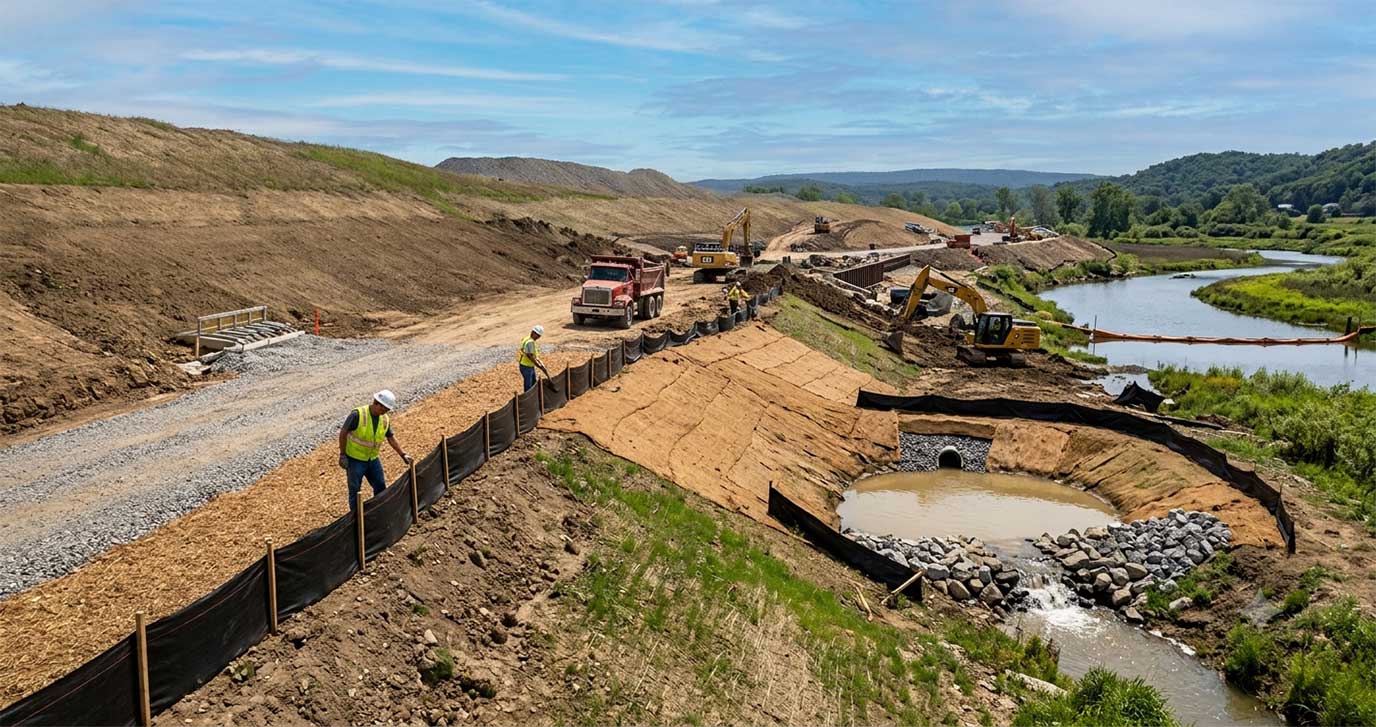
Construction activities can significantly disturb soil and increase the risk of erosion and sediment runoff. Without proper erosion and sediment control (ESC) measures, nearby roads, drainage systems, rivers, and neighboring properties can be negatively affected. Municipalities and environmental agencies across Ontario require effective ESC plans to minimize environmental impacts and maintain regulatory compliance throughout the construction process.
What is Erosion and Sediment Control?
Erosion and sediment control refers to the temporary measures used during construction to prevent soil from being washed away by rainwater or wind. The main objective is to keep sediment on-site and protect surrounding infrastructure, waterways, and ecosystems.
Effective ESC practices help:
- Protect storm sewer systems and catch basins
- Reduce pollution in nearby watercourses
- Maintain site safety and cleanliness
- Avoid municipal fines, stop-work orders, and project delays
Common Causes of Erosion on Construction Sites
Construction sites are particularly vulnerable to erosion because vegetation is removed and soil becomes exposed. Some common causes include:
- Heavy rainfall and stormwater runoff
- Improper grading
- Unstabilized stockpiles
- Vehicle movement across exposed soil
- Lack of drainage control measures
Implementing the right ESC strategies early in the project can significantly reduce these risks.
Key Erosion and Sediment Control Measures
1. Silt Fencing
Silt fencing is one of the most commonly used ESC measures on construction sites. These temporary barriers are installed along downgradient areas to intercept sediment-laden runoff before it leaves the site.
Best practices include:
- Proper trenching and anchoring of the fence
- Installing along contour lines
- Regular inspection after rainfall events
- Replacing damaged or clogged sections immediately
When installed correctly, silt fences are highly effective at controlling sediment migration.
2. Construction Entrances
Mud tracking from construction vehicles can create safety hazards and municipal complaints. Stabilized construction entrances help reduce sediment being carried onto public roads.
Typical construction entrances include:
- Crushed stone access pads
- Geotextile fabric beneath aggregate
- Defined entry and exit points
- Routine maintenance and sediment removal
A properly maintained entrance keeps roads cleaner and minimizes street sweeping requirements.
3. Catch Basin Protection
Storm drains and catch basins are highly sensitive to sediment accumulation during construction. Catch basin protection devices prevent sediment from entering municipal storm sewer systems.
Common protection methods include:
- Filter fabric inserts
- Gravel bags around catch basins
- Sediment traps
- Temporary inlet protection systems
These measures should be inspected regularly to ensure proper drainage and avoid flooding during storm events.
Importance of Regular Inspection and Maintenance
ESC measures are only effective when they are properly maintained throughout the project lifecycle. Contractors and site supervisors should conduct routine inspections, especially after heavy rainfall.
Maintenance activities may include:
- Removing accumulated sediment
- Repairing damaged barriers
- Stabilizing exposed soil areas
- Replacing ineffective control devices
A proactive maintenance program helps prevent environmental incidents and keeps projects compliant with municipal requirements.
Benefits of Effective ESC Planning
An organized erosion and sediment control plan offers several advantages:
- Faster municipal approvals
- Reduced environmental impact
- Improved site safety
- Lower risk of regulatory penalties
- Better public perception of the project
ESC planning should be integrated into the early stages of site development rather than treated as an afterthought.
Conclusion
Proper erosion and sediment control is a critical part of responsible construction management. Measures such as silt fencing, construction entrances, and catch basin protection help reduce environmental impacts while keeping projects compliant and efficient. With effective ESC design, regular inspections, and ongoing maintenance, construction teams can prevent costly delays, protect local infrastructure, and maintain regulatory compliance throughout the project lifecycle.